Quick Answer: Oversized furniture is any piece that creates a handling challenge because of its size, weight, shape, fragility, or the access around it. In Denver, oversized furniture moving is usually needed when a piece is hard to lift safely, hard to turn through stairs or hallways, or hard to deliver without extra planning.
At Express Movers, this is a common question before a quote. People often focus on whether an item is heavy, but the bigger issue is usually whether it can move through the space without damage, delays, or a last-minute change in plan.
What movers mean by oversized furniture
Movers use the term oversized furniture for pieces that need more than routine carrying and loading. That usually includes furniture that is unusually large, especially heavy, awkwardly shaped, fragile, or difficult to maneuver through the property.
The key point is that oversized does not describe the furniture alone. It also describes the move itself. A piece that is manageable in an open layout can become an oversized-item job in a tighter space with narrow stairs, short landings, or sharp turns.
- Large dimensions that limit turning space
- Weight that changes lifting and loading needs
- Awkward shape that makes grip and balance harder
- Fragile materials like glass or stone
- Access issues such as stairs, elevators, and narrow hallways
Oversized vs. heavy furniture: why the difference matters
Heavy furniture is not always oversized, and oversized furniture is not always the heaviest item in the home. That difference matters because it changes how the job may need to be planned.
A compact safe can be very heavy but still relatively straightforward if access is clear. A long sectional may weigh less than expected and still be one of the harder items to move because it may not pivot easily through a stair landing or tight hallway. That is a common source of confusion. People expect weight to be the main issue, but shape and route are often what slow the move down.
That is also why heavy lifting help for bulky or heavy items is not always the same as a standard furniture move. The challenge is usually a mix of carrying, route planning, and protection.
Common furniture items that are often considered oversized
Some pieces come up again and again because they create the same handling problems. The furniture matters, but so do the route, the building layout, and whether the item can be safely taken apart.
Large sofas, sectionals, and sleeper sofas
These are some of the most common oversized items because length and shape create maneuvering problems quickly. A long sofa can be difficult to rotate, and a sleeper sofa adds weight through the center of the piece, which can change balance and make stair carries harder.
Sectionals can look manageable because they come in multiple pieces, but the largest section still controls the move. The challenge gets harder when the item has fixed arms, a rigid frame, or limited grip points.
Armoires, dressers, and solid wood furniture
Solid wood pieces create a different kind of challenge. They may not be the biggest items in the home, but they are dense, hard to grip, and sometimes top-heavy.
Dressers and armoires also raise finish-protection concerns. Removing drawers can reduce weight, but it does not solve the route problem if the frame itself is tall, wide, or awkward at the corners.
Dining tables, glass tops, and stone surfaces
Fragility can make a piece function like an oversized item even when it is not especially large. Glass tops, stone surfaces, and removable table sections usually need more protection, more careful handling, and more attention to how the piece is carried and set down.
This is where the job is often underestimated. A table base may be simple, but the top changes the handling requirements. If you are comparing service types, furniture delivery vs. full moving in Denver becomes an important distinction when the item is large but the rest of the home is not being moved.
Beds, mattresses, and oversized frames
Bed frames, oversized headboards, and large mattresses are common oversized-item problems because they combine bulk with route constraints. Even when a frame comes apart, the larger components can still be hard to move through stairs or tight bedrooms.
Mattresses create their own issues because they flex, catch corners, and take up more turning space than people expect. Many people only realize this once the mattress reaches a hallway, landing, or narrow bedroom doorway.
When a normal furniture move becomes an oversized-item job
A furniture move becomes an oversized-item job when the path is more difficult than the piece looks at first glance. In practice, the route often determines the job as much as the furniture itself.
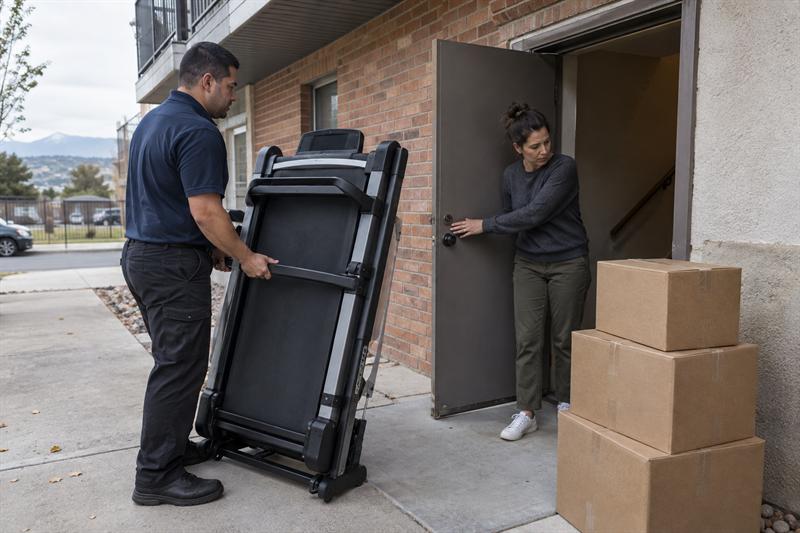
This often comes up in apartments, condos, and older homes. People plan around the size of the piece, but the job can change when the stairwell is narrow, the elevator is small, or the turn at the landing leaves little room to rotate safely.
Tight stairs, narrow hallways, and sharp turns
This is one of the most common reasons a normal item becomes an oversized-item problem. Long or rigid furniture needs turning space, not just doorway clearance.
If a piece clears the front door but gets stuck at the first interior corner, the route is the real issue. That can lead to delays, scuffed walls, or a piece that has to be backed out and reassessed in the middle of the move.
Elevator limits and apartment building access
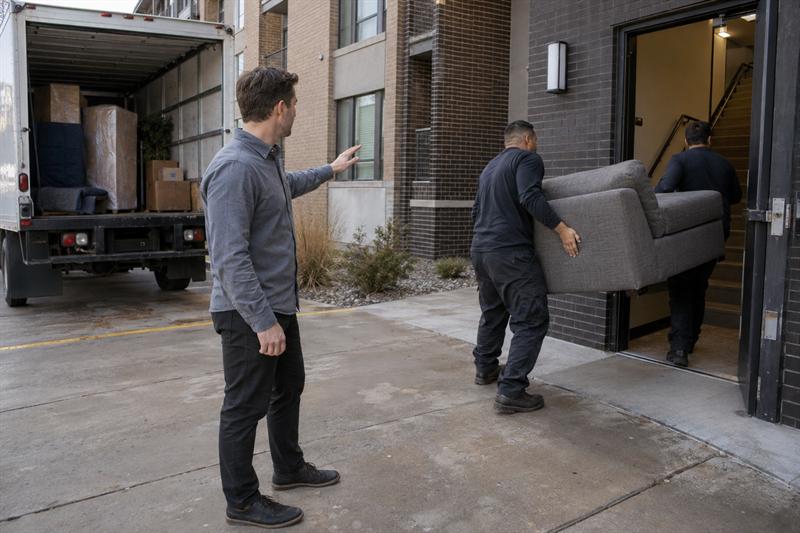
Apartment access can change the job quickly. Elevator size, long hallways, building rules, and loading-zone distance all affect how a large piece is handled.
A common pattern is that the item loads into the truck without much trouble, but placement at the destination becomes the harder part. This is where time can be lost and where a simple delivery can turn into a more technical move.
Fragile materials and detached components
Glass inserts, mirrors, stone tops, removable legs, and shelving all change the handling plan. These pieces require more than strength. They require a clear route, stable carrying positions, and protection that fits the material.
This gets harder when detached parts are loose or not wrapped separately. Once the move starts, that can slow loading, create confusion, and increase the chance of damage during placement.
If your furniture checks more than one of these boxes, it usually needs closer planning:
- The piece is long, rigid, or unusually awkward to turn
- The route includes stairs, elevators, or narrow interior corners
- The item has glass, stone, or delicate finish surfaces
- The largest section cannot be safely disassembled
When more than one of these conditions shows up together, the move usually needs a planned oversized-item approach rather than standard carrying help.
How movers evaluate whether a piece needs special handling
Professional movers do not just ask what the item is. They look at the item, the route, and the points where the move is most likely to become difficult.
This is where generic advice falls short. The real question is not just whether the piece is big. It is whether the furniture and the property create a handling challenge that changes labor, equipment, timing, or protection needs.
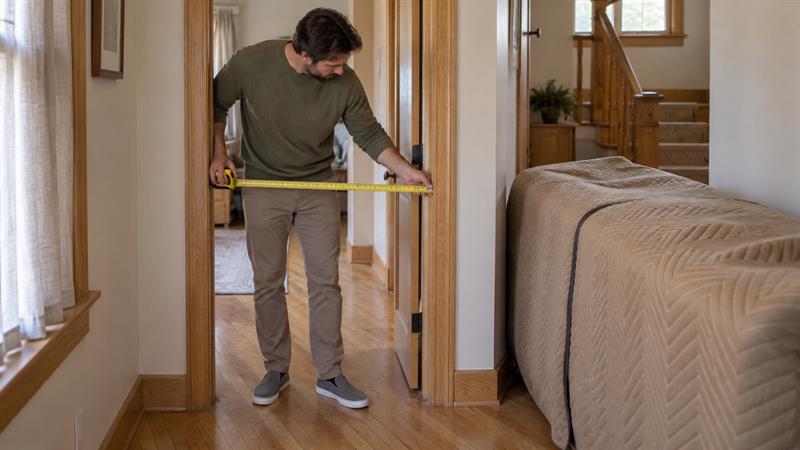
Measurements that matter
The most useful measurements are the ones that affect clearance and turning space:
- Item height, width, and length
- Doorway width
- Hallway clearance
- Stair width and landing depth
- Elevator interior dimensions when relevant
This is something many customers miss at first. A piece rarely becomes a problem at the widest opening. It usually becomes a problem at the narrowest and tightest point in the route.
Photos and details that speed up quoting
Photos usually answer questions faster than item labels. A mover can learn far more from a photo of the furniture and a photo of the stairwell than from a description like “large dresser” or “big couch.”
- Full photo of the item
- Photos of stairs, hallways, doorways, or elevator access
- Pickup and drop-off property type
- Whether the item comes apart
- Whether it includes glass or stone components
For readers getting ready to move in a tighter space, this connects closely with a small apartment moving checklist in Denver. The same access details that affect the truck also affect whether a furniture piece becomes an oversized-item job.
What to prepare before requesting oversized furniture moving in Denver
The goal is to replace guesswork with usable details. That makes the move easier to scope and reduces confusion on move day.
This is where planning saves time. The more clearly the route and item are understood up front, the less likely the move is to stall partway through carrying.
Item dimensions and estimated weight
Exact weight is helpful when known, but dimensions usually matter more first. Saying “oversized couch” is less useful than giving length, depth, and height.
If weight is unknown, that does not stop the planning process. Shape, material, and access often explain more than a rough guess on weight alone.
Pickup and delivery access details
Include the details that change the route:
- Any stairs at pickup or delivery
- Elevator access and approximate interior size
- Parking distance from the entrance
- Long hallway carries
- Building access restrictions or reserved move windows
This is one of the clearest decision drivers in oversized furniture moving in Denver. If access is tight, the route becomes a major part of the job.
Whether disassembly is possible
Disassembly helps when it reduces the size of the problem piece without creating a new problem during reassembly. Bed frames, table bases, and some sectionals benefit from that. Other items do not.
A common mistake is assuming every piece should be taken apart. If the main body is still rigid, fragile, or hard to turn, disassembly only solves part of the problem. The route still has to work.
Oversized furniture delivery vs. full moving service: which one fits?
The right option depends on how much is being moved and what is actually creating the difficulty. In many cases, single-item transport fits furniture delivery, while a larger household move with oversized pieces fits full moving service.
The most practical choice is usually the one that matches the scope of the job, not the biggest service category available. That keeps planning focused on what really needs to be moved.
Single-item delivery or in-home placement
This is the better fit when the issue is one large purchase, one marketplace pickup, or one difficult piece that needs transport and placement. The job is centered on the item itself, not on moving a whole home.
This is common with sofas, dining tables, dressers, and bulky specialty pieces. If the furniture is the main challenge, targeted delivery support is usually the more practical option.
Multi-room or whole-home moving needs
Full moving service makes more sense when oversized furniture is just one part of a larger relocation. Once the job includes multiple rooms, truck planning, broader inventory, and schedule coordination, the oversized piece becomes one part of the move rather than the entire move.
That difference matters because it changes how labor, timing, and loading strategy should be organized. For broader planning, local move planning in metro Denver becomes just as important as the furniture itself.
Key Takeaways
- Oversized furniture is defined by handling difficulty, not just by size.
- Weight, length, fragility, and turning space all affect whether a piece needs special handling.
- The route through the property is often what changes a normal item into an oversized-item job.
- Photos, dimensions, and access details lead to better planning and fewer move-day surprises.
- Single-item furniture delivery and full moving service solve different problems.
Need help moving a large or awkward piece in Denver?
Express Movers is a practical option when the furniture is large, awkward, fragile, or difficult to move through the space. The real problem is usually not the label on the item. It is the way the item, the route, and the building conditions combine into a job that needs planning instead of guesswork.
When that is not addressed early, the move can slow down, the route can become harder than expected, and the risk of damage can increase. Express Movers helps with furniture delivery, local moving, and oversized-item handling in a way that matches the actual job, whether that means one difficult piece or a larger move with access challenges.
If you already know the item dimensions, the route details, or the problem spots in the home, the next step is simple. Use the contact page to request a quote and describe the piece, the access, and whether delivery or full moving support is needed.
FAQ
What is considered oversized furniture for moving?
Oversized furniture is any piece that needs special handling because of size, weight, shape, fragility, or limited access. That includes furniture that is hard to carry safely, hard to turn through the route, or hard to protect during delivery.
A tall armoire, a sleeper sofa, or a glass-top dining table can all be oversized for different reasons. What matters most is not the label of the item. It is what the item demands once it has to move through real spaces.
Is oversized furniture based on weight or dimensions?
It is based on both, plus the shape of the piece and the route it has to travel. Weight affects lifting requirements, but dimensions and rigidity usually control whether the piece can be maneuvered at all.
This is why a compact heavy item can be simpler than a lighter sectional. The heavier piece may load more cleanly, while the sectional creates turning problems at corners. The misunderstanding is thinking heavy automatically means more difficult, when access and shape are often the bigger issue.
Can movers in Denver move just one oversized furniture item?
Yes, one oversized piece can still require professional help if the item is difficult to carry, fragile, or hard to place. The number of items matters less than the complexity of the one item being moved.
A single large dresser, sectional, or dining table is enough to create a more technical move when stairs, tight corners, or fragile materials are involved. In those cases, the job is still small in volume but not small in planning needs.
What details should I give a mover for a large furniture quote?
Start with dimensions, photos of the item, and photos of the route. The most useful details are usually the doorway, stairs, hallway, elevator, and whether the furniture can be disassembled.
Those details change the plan more than a simple item description. “Large couch” does not explain whether the piece is flexible, sectional, or able to turn at the landing. The route usually reveals the real difficulty.
Does oversized furniture delivery cost more than standard delivery?
It often does when the item requires more labor, more time, or more protection than a standard piece. The reason is not just size. It is the added complexity of stairs, awkward angles, long carries, or fragile materials.
A glass-top table is a good example. It may not be the heaviest item in the move, but it usually takes more planning and more careful handling than a simpler bulky piece. That is what changes the service level.
What if oversized furniture will not fit through a doorway or stairwell?
If it will not fit, the problem is usually at the tightest turn or narrowest clearance point, not at the main entry. This can lead to delays because the move stops at the exact place where there is little room to adjust.
This is why measurements matter most at landings, corners, hallway transitions, and elevator interiors. A piece that clears the front door can still stop at the first turn, which is often the moment people realize the item needed an oversized-item plan from the start.